
Introduction
Cadherin-5, also known as VE-Cadherin (vascular endothelial cadherin), is an endothelial cell-specific adhesion protein critical for vascular integrity and the regulation of endothelial permeability. This protein is particularly important in cardiovascular and cancer research, with applications in studying vascular function, angiogenesis, and tumor metastasis. The Cadherin-5 ELISA assay allows for the quantification of this protein in biological samples, aiding in the study of vascular diseases and inflammatory conditions. Studies from National Institutes of Health (NIH) and research by Harvard University underscore Cadherin-5’s critical role in maintaining endothelial function and its relevance in disease progression.
Importance of Cadherin-5 in Vascular Health
Cadherin-5’s role in endothelial cell adhesion is essential for vascular health. It maintains the integrity of blood vessel walls, controls cell junctions, and regulates vascular permeability. Research by the Centers for Disease Control and Prevention (CDC) demonstrates how Cadherin-5 loss can lead to endothelial dysfunction, which contributes to conditions like atherosclerosis, inflammation, and edema. Studies at Stanford University have further shown that Cadherin-5 dysregulation may play a role in cancer cell extravasation during metastasis.
Overview of the Cadherin-5 ELISA Assay
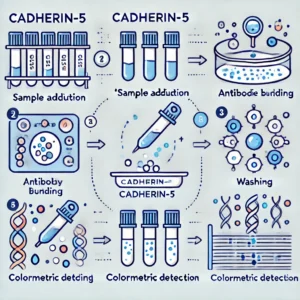
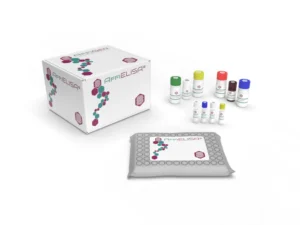
The Cadherin-5 ELISA assay is a quantitative, sandwich-based assay used to measure Cadherin-5 levels in various biological samples such as serum, plasma, and tissue lysates. The assay has applications in both clinical and experimental research, as indicated by guidelines from the Food and Drug Administration (FDA), ensuring standardized, reproducible data for accurate analysis of Cadherin-5 concentrations.
- Sample Preparation: Biological samples, typically from serum or plasma, are processed to ensure the integrity of Cadherin-5. The National Institute of Standards and Technology (NIST) provides protocols to ensure consistency in sample handling, which is crucial for reproducibility.
- Antibody Binding and Detection: The ELISA process employs highly specific antibodies for Cadherin-5, as detailed by University of California, Berkeley. The binding process involves monoclonal and polyclonal antibodies that enhance sensitivity and minimize cross-reactivity.
- Colorimetric Analysis: A colorimetric substrate reacts with bound antibodies, generating a measurable signal correlating with the Cadherin-5 concentration. Research by Yale University has highlighted the importance of optical density (OD) measurements for precise data interpretation.
Applications of Cadherin-5 ELISA in Research and Medicine
The Cadherin-5 ELISA assay is a valuable tool in understanding diseases that affect endothelial function, including cardiovascular disorders, inflammatory conditions, and cancers. Studies from Johns Hopkins University and University of Pennsylvania underscore its utility in both basic and translational research.
- Cardiovascular Research: Elevated levels of Cadherin-5 are linked with endothelial dysfunction, which can lead to atherosclerosis and other cardiovascular diseases. The American Heart Association (AHA) supports using Cadherin-5 measurements in studies on vascular health and hypertension.
- Cancer Metastasis: Cadherin-5 is involved in the process of angiogenesis, and its expression is altered in tumors, impacting cancer cell metastasis. Research by the National Cancer Institute (NCI) has shown that monitoring Cadherin-5 levels can help understand tumor vascularization and metastatic behavior.
- Inflammatory Diseases: Cadherin-5 plays a role in the inflammatory response by regulating endothelial permeability. According to the National Institute of Allergy and Infectious Diseases (NIAID), studying Cadherin-5 can provide insights into chronic inflammatory conditions and sepsis.
Quality Control and Standardization in Cadherin-5 ELISA
The University of Michigan emphasizes quality control (QC) in ELISA assays to ensure reliability and accuracy in measurements. Each step of the Cadherin-5 ELISA assay includes QC measures, from reagent preparation to plate calibration, to maintain precision across multiple runs. The National Institute of General Medical Sciences (NIGMS) supports protocols for calibrating detection ranges to avoid variability in results.
- Reagent and Sample Control: According to guidelines from University of California, San Francisco (UCSF), reagents should be validated to ensure stability and potency.
- Calibration of Optical Density (OD): Calibration procedures ensure the accuracy of colorimetric readings. The Mayo Clinic underscores the importance of OD calibration in preventing data discrepancies and ensuring inter-assay consistency.

Future Directions for Cadherin-5 Research
Research on Cadherin-5 continues to expand in fields like cardiovascular medicine and oncology. The University of Chicago explores novel therapies targeting Cadherin-5 to regulate endothelial permeability, which may be beneficial in managing tumors and inflammatory diseases. Studies by National Heart, Lung, and Blood Institute (NHLBI) are investigating Cadherin-5 as a biomarker in cardiovascular risk assessment, particularly for predicting heart failure.
Conclusion
The Cadherin-5 ELISA assay is a crucial tool for measuring this important adhesion molecule in various research contexts. Its applications in cardiovascular research, cancer metastasis studies, and inflammatory disease research make it valuable in both laboratory and clinical settings. As studies continue to link Cadherin-5 to critical biological pathways, its role as a biomarker for endothelial health is expected to grow, supported by extensive research from institutions like Emory University and the CDC.